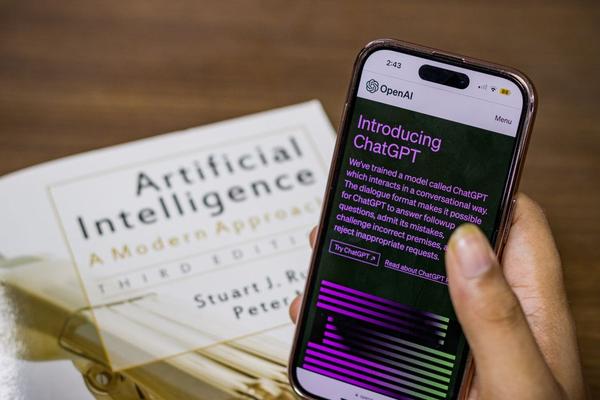
A chatbot can draft an email in seconds, but what if that email contains a customer’s medical history, a private contract or an employee’s performance review? The question is no longer just whether AI gives a useful answer. It is what happens to the information supplied along the way.
AI privacy risks affect individuals and organisations alike. They arise from more than hacking: ordinary product features, unclear retention rules and unnecessary sharing can expose information. Understanding these pathways makes it easier to use AI without treating every conversation as confidential.
What happens to information entered into an AI tool?
When someone types a prompt, uploads a file or connects an account, that information may be processed on the provider’s servers or by other services supporting the feature. Depending on the product and settings, it may appear in chat history, diagnostic logs, safety-review processes or other records.
Not every AI service uses conversations to train models. Some offer controls that exclude eligible content from training, and business agreements may provide stronger restrictions. Chat history, retention and model training are separate questions, however. Turning off one feature does not automatically disable the others.
The AI privacy risks that deserve attention
Sensitive information inside prompts
Prompts can contain names, addresses, financial details, passwords, confidential research or information about people who never agreed to use the tool. Even a simple summary request can expose an entire document. Removing names helps, but combinations of job titles, dates and locations can still identify someone indirectly.
Storage, retention and deletion gaps
Providers may retain data for different periods depending on account type, safety requirements, legal obligations and configuration. Deleting a visible conversation does not necessarily erase every log or backup immediately. For better ai data privacy, check retention periods, deletion procedures and whether uploaded files follow different rules.
Training and secondary use
Some services may use permitted conversations to evaluate or improve systems; others restrict that use contractually. The concern is not that every submitted sentence automatically appears in another person’s answer. It is that personal or proprietary material may be reused beyond its intended purpose. Check the terms and controls instead of assuming a paid account guarantees exclusion.
Third-party tools and connected accounts
An assistant connected to email, cloud storage or a customer database may access far more material than a standalone chatbot. Add-ons and outside processors introduce other access points. Malicious instructions hidden in retrieved documents may even try to redirect an AI agent toward disclosing information. Permissions and human approval matter as much as the chatbot’s privacy policy.
Private details revealed through outputs
AI systems can sometimes expose sensitive details through insecure workflows, overly broad search indexes or answers assembled from private documents. A workplace assistant that searches files across departments must enforce the original permissions. Strong ai data security protects what a system retrieves and displays, not just what users type.
A workplace example: the supposedly anonymous HR summary
Imagine a manager uploading performance reviews and asking an AI tool to identify promotion candidates. They remove employee names but leave department, salary, tenure and recent absences intact. Colleagues could still recognise individuals. The upload might also breach company policy if the tool is not approved for personnel records.
A safer approach is to use an authorised system, remove unnecessary identifiers, restrict access and aggregate findings where possible. The organisation should establish a lawful basis for processing personal information and consider whether an impact assessment is required. Privacy protection begins before the prompt is submitted.
How individuals can reduce chatbot privacy risks
Start with one rule: avoid putting information into a general-purpose chatbot that you would not share with an outside service. Replace real account numbers, names and addresses with placeholders whenever those details are irrelevant to the task.
Review conversation-history and training settings separately. Understand temporary-chat features and the limitations of deletion controls. Use multifactor authentication, check connected applications and revoke unused permissions. For particularly sensitive tasks, choose an approved service with clear protections or keep the data out of AI altogether.
Useful related reading includes safe AI prompts for everyday use and an AI data security checklist. Both turn abstract warnings into practical decisions.
What businesses should put in place
Organisations need rules employees can follow. Classify information as public, internal or restricted, and specify which approved tools can handle each category. Drafting a public product description might be allowed; uploading customer records or unreleased financial figures may require separate approval.
Before adopting a provider, examine its data-processing terms, retention schedule, subprocessors, security controls and breach-notification commitments. Ask whether prompts are used for training, where information is processed, who can access logs and what happens when a contract ends. Encryption cannot, by itself, resolve questions about lawful use or excessive collection.
Apply least-privilege access to integrations, maintain appropriate audit records and test whether retrieval systems respect document permissions. Employees should know how to report accidental uploads. The US National Institute of Standards and Technology’s generative AI risk guidance supports assessing risks across a system’s lifecycle rather than relying on a one-time checklist.
Privacy is also a question of rights and trust
Data protection requirements vary by jurisdiction. Under UK and EU data protection frameworks, organisations processing personal data generally need an appropriate lawful basis, transparency and suitable safeguards. Individuals may have rights to access or erase information, subject to conditions and exceptions. The UK’s Information Commissioner’s Office addresses these responsibilities in its AI guidance.
In the United States, the Federal Trade Commission has warned AI providers against breaking privacy and confidentiality promises. Terms such as “private” and “secure” should be supported by clear explanations of actual practices, not marketing alone.
A guide to choosing privacy-conscious AI tools can help readers compare meaningful safeguards.
Frequently asked questions
Can AI companies read my chatbot conversations?
Depending on the provider, authorised systems or personnel may access certain conversations for operational, safety or support purposes. Read the privacy notice and account settings rather than assuming nobody else can access them.
Does disabling model training delete my prompts?
No. Training controls and retention are different. Turning off training use may not remove existing chats, uploads, security logs or backups. Check deletion rules separately.
Is it safe to enter personal data into AI?
That depends on sensitivity, the provider’s controls, the intended purpose and applicable law. Avoid sharing unnecessary personal details, especially someone else’s confidential information, and use a governed service when sensitive processing is necessary.
Can a business use generative AI and still protect privacy?
Yes. Approved vendors, limited access, staff training, clear retention rules and regular risk reviews can reduce exposure, although no system eliminates every privacy or security risk.
Conclusion
The biggest AI privacy risks often begin with routine actions: pasting a document, enabling an integration or assuming a deleted chat has vanished everywhere. Better habits help individuals, while careful procurement and governance help businesses. Treat each prompt as a data-sharing decision, and useful AI becomes easier to balance with trust.